Case study · Institutional platform
Teacher evaluations, made anonymous.
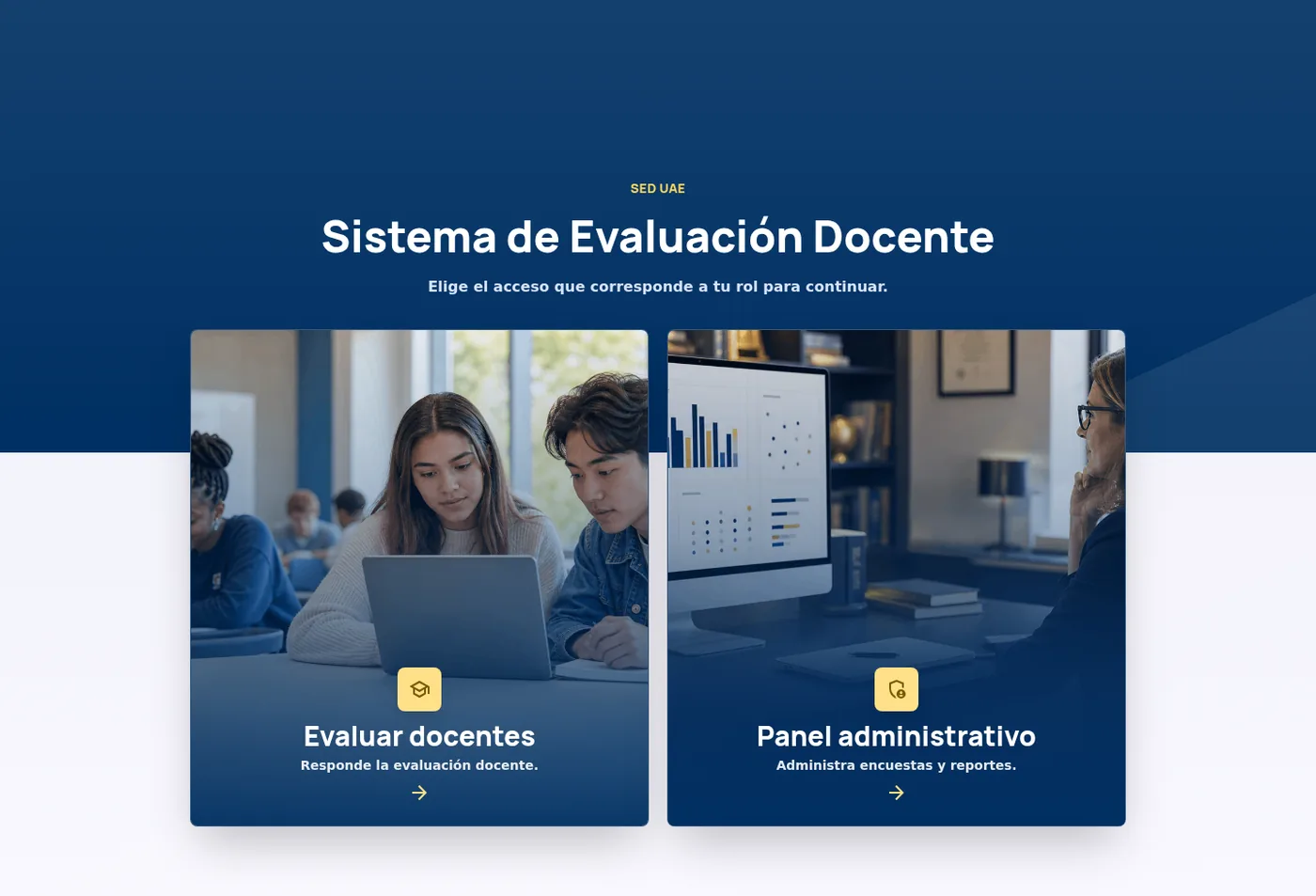
SED is the evaluation system for a public university in Mexico: students, teachers, and staff evaluate teaching performance every term without storing a link between a response and a person's identity.
Django + DRFReact 19PostgreSQLRedis + CeleryDocker / AWS
By construction
How anonymity is built
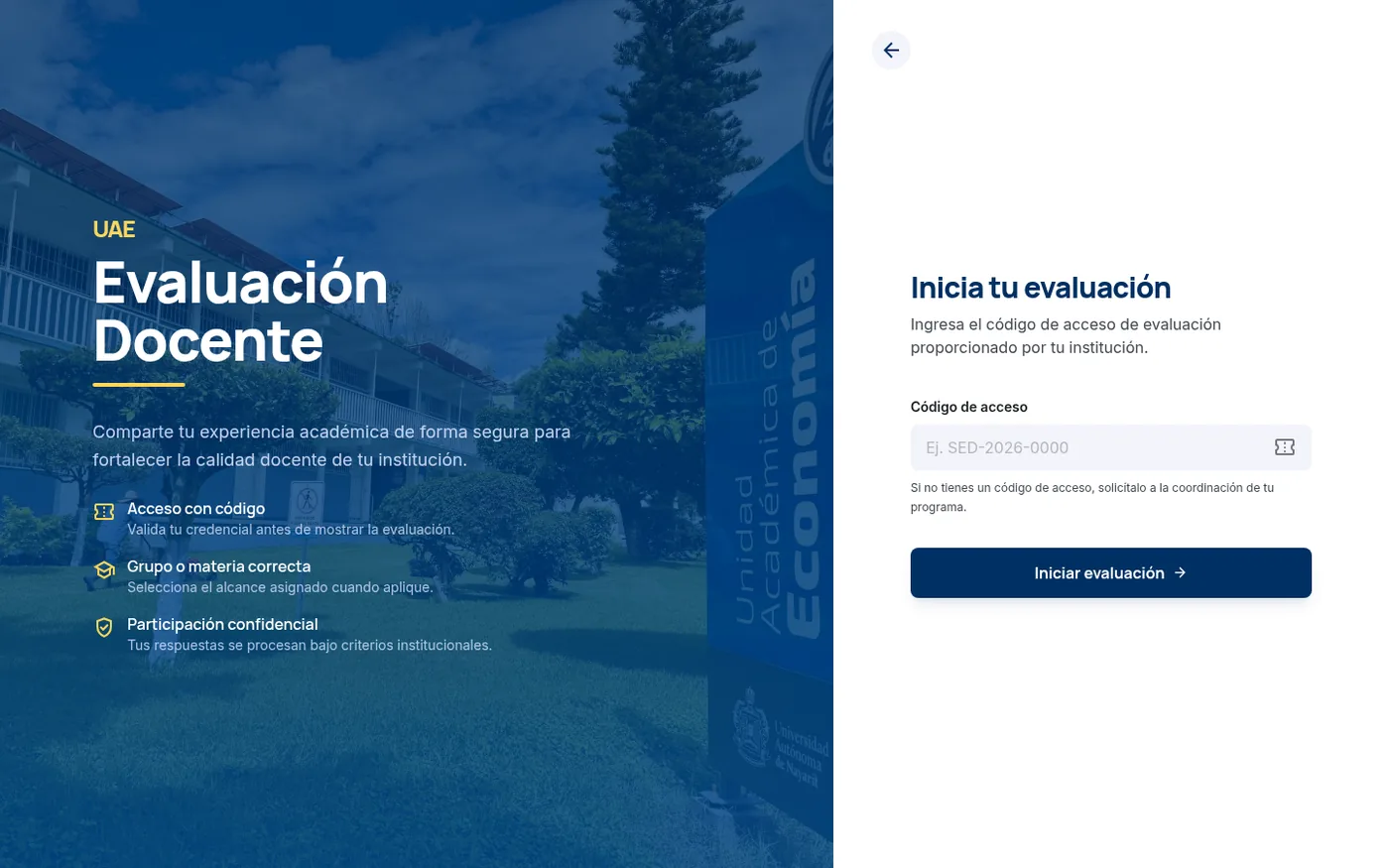
The respondent never creates an account. The file that remains cannot be edited.
- 01Token
The server issues a credential without a name.
- 02Session
The respondent redeems it once without creating an account.
- 03File
The answer is written. Then it cannot change.
The problem
The university's previous evaluation system was a legacy stack with a fundamental trust problem: respondents could not be sure their answers were anonymous, so participation and honesty suffered. The new system had to guarantee anonymity by construction, survive real term-end traffic, and produce reports administrators could audit.
What I built
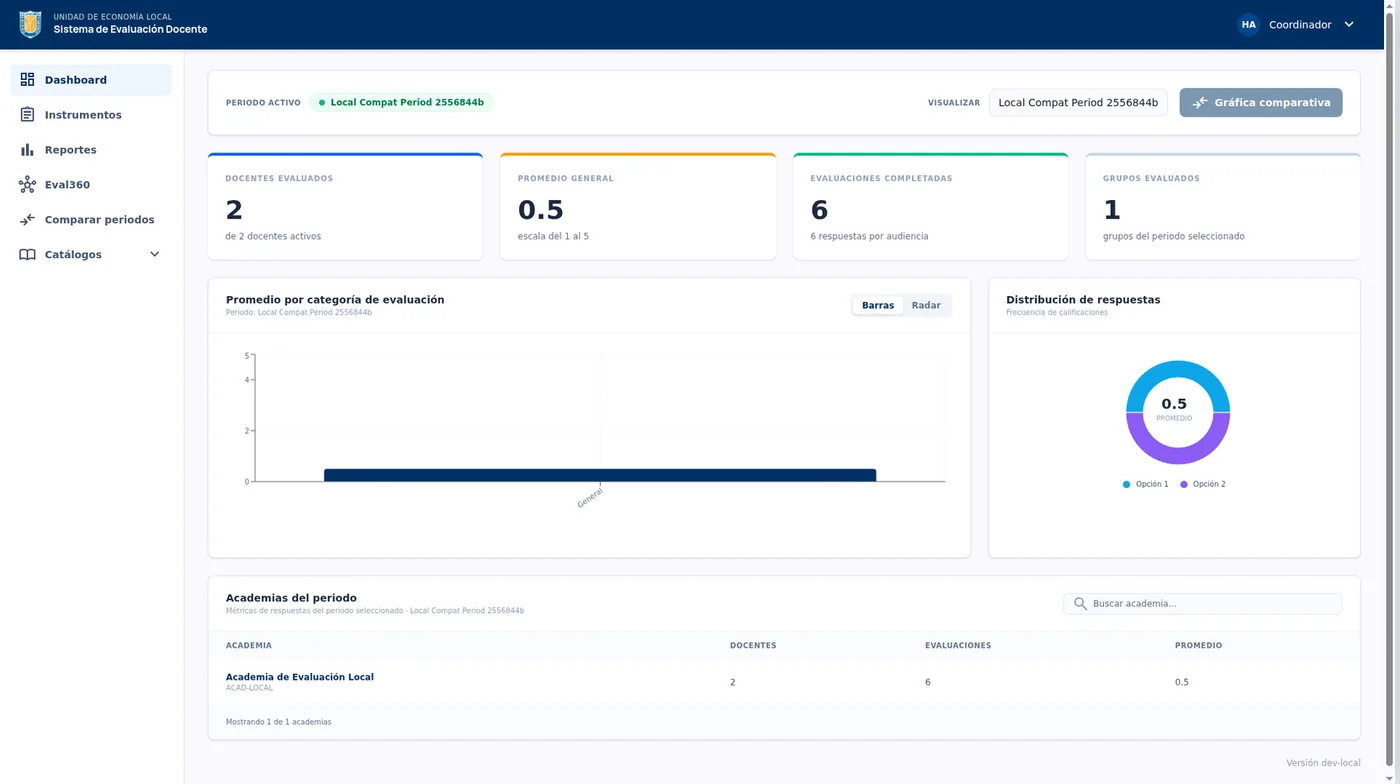
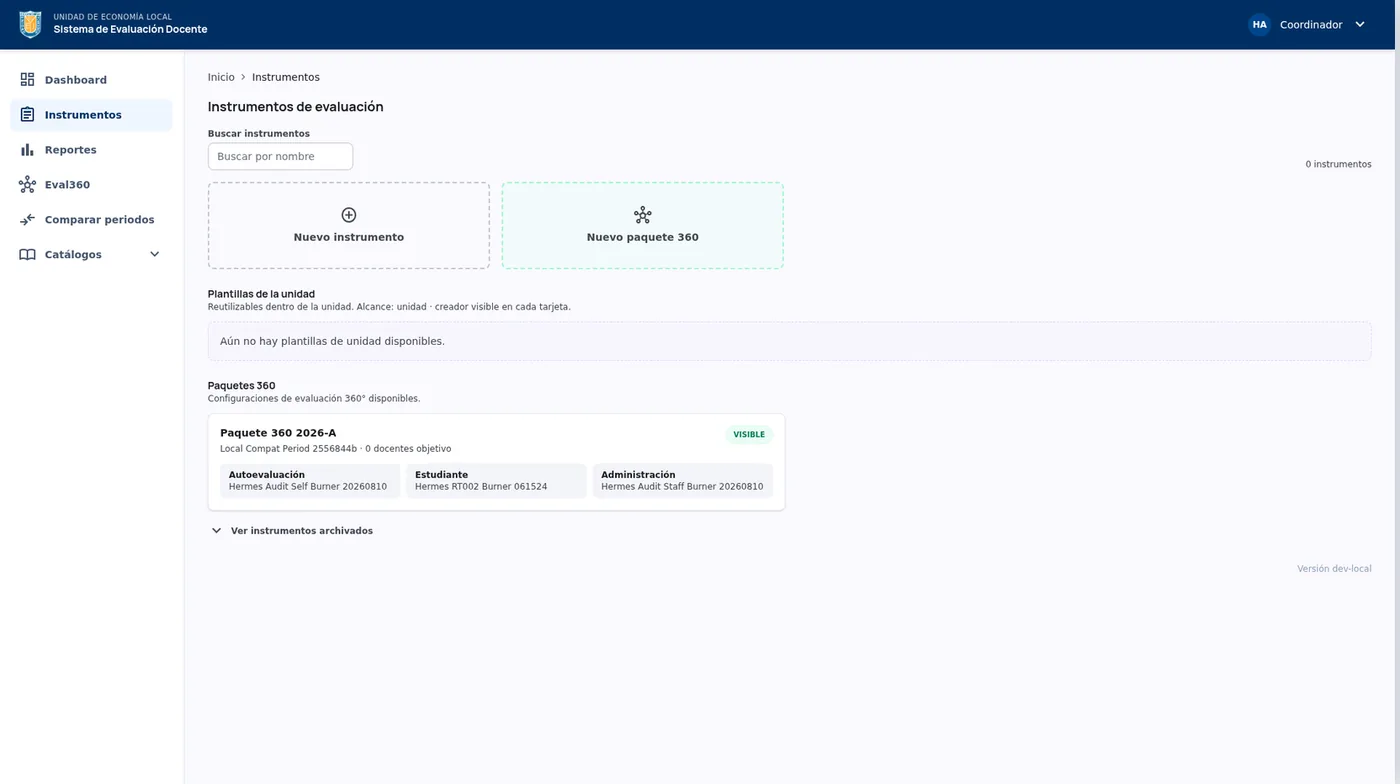
A full-stack platform with two separate sides: an admin console for catalogs, teaching assignments, survey instruments, credentials, and analytics, plus a respondent flow that works with a single opaque credential and leaves no identifying trail.
- Opaque credential system: respondents redeem a server-issued token for an anonymous session. No name, no account, no way to link a response to a person.
- Immutable submissions: once an evaluation is submitted it cannot be edited or deleted. The dataset the institution reports on remains the dataset that was collected.
- Survey engine: configurable instruments with matrix questions, Likert scales, open text, theory/practical classification questions. Each instrument follows a strict lifecycle: draft → published → closed, with soft-deletes instead of hard erasure.
- Analytics & reports: per-professor and per-unit reports for institutional decision-making.
Engineering standards
The project has checks at each stage of development and release:
- 1,750+ backend tests and 830+ frontend tests, run in CI on every change.
- Strict bundle budgets: every JavaScript chunk is measured and capped for slower devices and campus Wi-Fi.
- Ongoing security review: authentication boundaries, sessions, and data storage are reviewed throughout development. Findings are tracked until they are resolved.
- Observability built in: health checks, request tracing, and metrics wired to monitoring from day one.
- Reproducible deployment: Docker images built in CI, promoted through environments, released to AWS with an audited pipeline.
The requirement was never just "collect evaluations." It was: prove to thousands of students that their voice is safe.
Result
The institution can use the platform for each evaluation period. The respondent flow does not collect a person's identity, submitted evaluations cannot be changed, and automated tests protect the main workflows. Architecture documentation gives new engineers a place to start without relying on an oral handover.
The current deployment is live at98.95.232.141.sslip.io/. Admin and evaluation entry require institutional credentials.
Building software that handles sensitive data?
Tell me what the system must protect and how people will use it.
Talk about your project